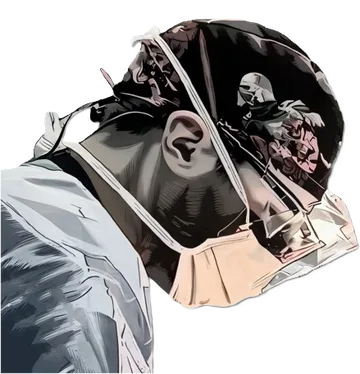
Surgeries
Every surgery must be individualized to each patient. A joint replacement aims to relieve pain and restore mobility and function. In sarcomas and other tumors, we aim to save the life and save the limb when possible. In metastatic bone disease, we want to optimize quality of life and prevent complications. See all the details here.
Group A
Joint replacement surgery (arthroplasty)
Replacing joints damaged by arthritis, fracture or other causes, fixation of hip fractures, and revision surgery when a previous implant fails.
Total hip replacement
Replaces the damaged hip joint with low-friction artificial components, mainly in advanced osteoarthritis when pain limits daily life.
View detailsTotal knee replacement
Resurfaces the worn femur and tibia with a prosthetic joint to reduce pain and restore function in advanced osteoarthritis.
View detailsHip fracture surgery
Stabilizes or replaces the fractured hip —with fixation or a prosthesis, depending on the fracture type— to restore walking as soon as possible.
View detailsHip replacement revision
New surgery on a hip implant that fails from loosening, wear, dislocation or infection; technically more complex than a primary.
View detailsKnee replacement revision
Revision of a knee implant that has failed from loosening, wear, instability or infection, using revision components.
View detailsTwo-stage revision for infection
Treats prosthetic joint infection of the hip or knee in two stages: removal with an antibiotic spacer and, once cleared, reimplantation.
View detailsGroup B
Oncologic surgery: sarcomas and tumors
From diagnosis to reconstruction: resection of bone and soft-tissue tumors with oncologic margins, prioritizing limb preservation and function.
Bone and soft-tissue biopsy
The first step to a precise diagnosis. The biopsy must be planned by the same team that will perform the definitive surgery.
View detailsSoft-tissue sarcoma resection
Wide excision of a soft-tissue sarcoma with a margin of healthy tissue, usually integrated with radiotherapy.
View detailsBone sarcoma resection
Resection of the bone tumor with oncologic margins, followed by reconstruction of the resected segment.
View detailsOther tumor resections
Removal of benign, locally aggressive and other lesions that, without being sarcomas, need specialized surgical management.
View detailsCurettage with adjuvants and filling
For benign or intermediate bone tumors: the lesion is emptied, the walls treated with adjuvants and the defect filled, preserving the joint.
View detailsMegaprosthesis reconstruction
Replaces segments of bone and joint removed with the tumor using large tumor prostheses.
View detailsAllograft reconstruction
Reconstructs the resected bone with a structural bone allograft or an allograft-prosthesis composite.
View detailsPelvic tumor resection
One of the most complex surgeries: resection of pelvic bone tumors, focused on sarcomas, preserving the limb when it is safe.
View detailsLimb salvage or amputation
The goal is to preserve a useful, tumor-free limb whenever it is safe; in some cases amputation is the safest and most functional option.
View detailsGroup C
Metastatic bone disease and pathologic fractures
Treating bone weakened or fractured by metastasis, to control pain and restore support and mobility.
AORIF
A combined technique for metastatic bone disease: ablation, osteoplasty, reinforcement and internal fixation in a single operation.
View detailsBone metastasis fixation
Stabilizes bone weakened or fractured by metastasis —preventively or after a fracture— with nails or plates, to relieve pain and restore weight-bearing.
View detailsProsthetic replacement for metastasis
When bone destroyed by metastasis is no longer reconstructable or involves a joint, the segment is resected and replaced with a prosthesis.
View detailsCross-cutting
3D planning and custom implants
In the most complex reconstructions —revision implants, megaprostheses and pelvic tumors— surgery is planned on each patient's images and taken to the operating room with 3D-printing technology.
Custom implants
Prostheses designed specifically for each person's anatomy and defect.
Cutting guides
3D-printed templates that reproduce the plan and enable precise cuts.
This information is educational and does not replace a medical evaluation. Every case requires an individualized assessment and treatment, and no surgery guarantees an outcome.
Questions about your case?
Book an evaluation at RedSalud Vitacura or the Instituto Oncológico FALP.
Book an appointment