Knee replacement
Knee arthroplasty (replacement) resurfaces the worn joint surfaces. In selected patients it usually reduces pain and improves function, though it does not guarantee freedom from pain or a fully normal range of motion.
What is it?
The knee joins the femur, the tibia and the patella. Its surfaces are covered by cartilage, which allows smooth gliding during bending and straightening.
When that cartilage wears away, pain, deformity and stiffness appear. A knee replacement resurfaces the damaged surfaces with artificial components.
How does it work?
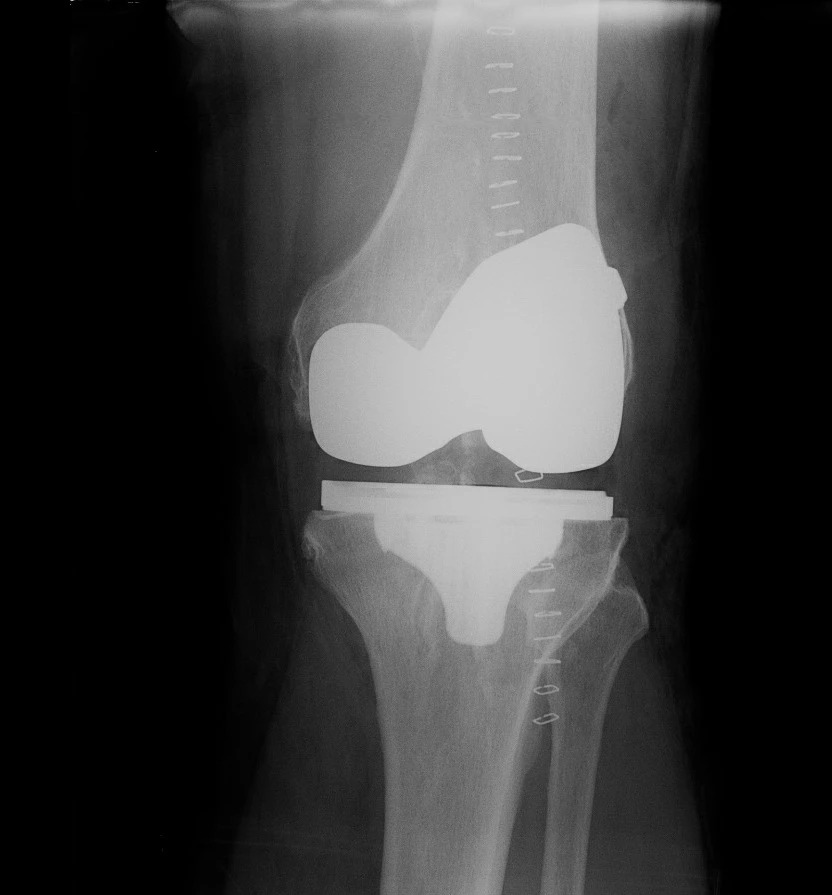
A metal piece resurfaces the lower end of the femur.
A metal baseplate on the tibia holds a low-friction polyethylene insert.
In some cases its back surface is resurfaced to improve gliding.
The components glide against each other, reproducing the knee's natural movement.
Alignment and balance
Beyond resurfacing the surfaces, an essential part of the surgery is correcting the deformity and balancing the ligaments so the knee ends up aligned and stable. Much of the result and of how the knee feels when walking depends on that balance.
When is it indicated?
- Advanced knee osteoarthritis.
- Rheumatoid arthritis or other inflammatory arthropathies.
- Post-traumatic osteoarthritis.
- Pain and functional limitation that do not respond to conservative treatment.
Revision replacement
As in the hip, a knee prosthesis may with time need a further operation —a revision replacement— from wear, loosening or infection. It is a more complex operation than the primary one and benefits from management by an experienced team.
Benefits, alternatives and shared decision-making
Surgery usually reduces pain and improves function in selected patients, but it does not guarantee freedom from pain or a fully normal range of motion. The decision to operate is made together, considering the symptoms, their impact on daily life and the available alternatives.
Before surgery, non-surgical measures are usually tried: analgesia, physiotherapy, weight loss and activity modification. A replacement is considered when pain limits daily life and does not respond to these measures.
Possible risks and complications
Like any major surgery, a knee replacement carries risks. Your team will discuss them with you according to your case:
- Persistent pain or stiffness.
- Infection of the wound or of the prosthesis.
- Venous thrombosis (blood clots) and pulmonary embolism.
- Fracture of the bone during or after surgery.
- Injury to nerves or blood vessels.
- The need for revision surgery in the future.
Recovery
Recovery is gradual. Most patients start walking with assistance the same day or the day after surgery, and work on range of motion and strength with physiotherapy over the following weeks, according to their team's plan.
Regain movement and weight-bearing within the plan you were given and with tolerable pain. If new, severe or mechanical pain appears, seek review.
This information is educational and does not replace a medical evaluation. Every case requires an individualized assessment and treatment.
Questions about your case?
Book an evaluation at RedSalud Vitacura or the Instituto Oncológico FALP.
Book an appointment