Bone tumors
Bone tumors are growths that develop in bone. They can be benign, of intermediate aggressiveness, or malignant (sarcomas), and each group needs different management.
What are they?
A bone tumor is an abnormal growth of cells in bone. Not all are cancer: the great majority are benign.
Telling the type of tumor apart is the first step of treatment, and it requires imaging, sometimes a biopsy, and evaluation by a team specialized in orthopedic oncology.
Three broad groups
Bone tumors are classified by their biological behavior.
Benign
They cannot spread to other organs. Many only need observation. Examples: osteochondroma, enchondroma, non-ossifying fibroma, osteoid osteoma and bone cyst.
Intermediate
They can grow and destroy bone locally, or recur after removal, but rarely spread. The classic example is giant cell tumor.
Malignant
They can invade and spread (metastasize). They need specialized treatment, usually combining surgery with chemotherapy or radiotherapy.
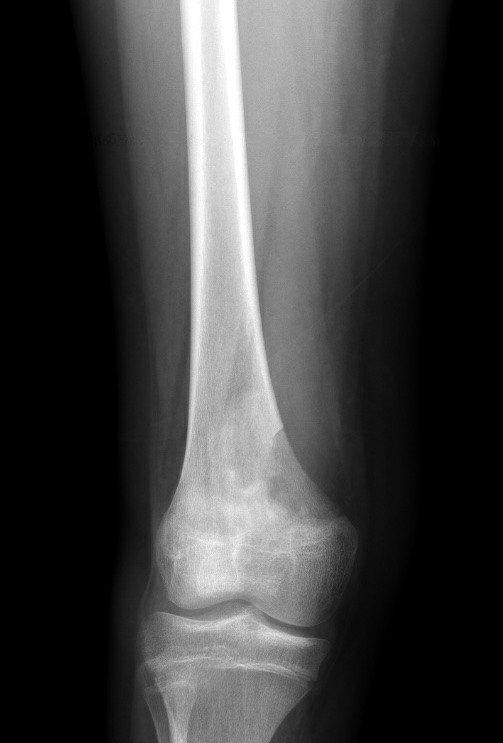
Common benign and intermediate tumors
Most bone tumors belong to this group. These are some of the most representative:
Osteochondroma
BenignThe most common benign bone tumor. It is a prominence of bone and cartilage that grows near the growth plate.
Enchondroma
BenignA cartilage tumor within the bone, usually in the hands and long bones; it is often asymptomatic.
Osteoid osteoma
BenignA small tumor that causes characteristic night pain, relieved by anti-inflammatory medication.
Non-ossifying fibroma
BenignVery common in children. It is usually found incidentally and disappears over time.
Giant cell tumor
IntermediateAppears in young adults near the joints. It is locally aggressive, can recur and, rarely, spread.
Aneurysmal bone cyst
IntermediateAn expansile, blood-filled lesion that can grow and weaken the bone; more common in children and adolescents.
Main bone sarcomas
Bone sarcomas are uncommon and very heterogeneous. These are the most representative:
Osteosarcoma
Children, adolescents and young adultsThe most common primary bone sarcoma. It usually appears near the knee and produces immature bone. It is treated with chemotherapy and surgery.
Chondrosarcoma
AdultsIt arises from cartilage, often in the pelvis and femur. It responds poorly to chemotherapy and radiotherapy, so surgery is the mainstay of treatment.
Ewing sarcoma
Children and adolescentsA small round cell tumor. It is treated with systemic chemotherapy plus local control with surgery and/or radiotherapy, depending on site, resectability, response and margins.
Bone metastases
In adults, the most common cause of a malignant bone lesion is not a sarcoma but a metastasis from another cancer —such as breast, prostate, lung, kidney or thyroid.
Their management is coordinated with the oncology team and aims to control pain, prevent or treat fractures and maintain function and quality of life. It may include systemic treatment of the cancer, radiotherapy, bone-targeted agents, surgical stabilization or reconstruction when there is a fracture risk and, in selected cases, interventional treatments.
Warning signs
Seek timely care for any of these signs; some may represent an oncologic emergency:
- Severe, progressive or mechanical bone or back pain.
- Inability to bear weight on the limb.
- A fracture after minimal trauma.
- New weakness or numbness in the arms or legs.
- Deterioration of walking.
- Loss of bladder or bowel control: a new neurological deficit or these symptoms can be an oncologic emergency; seek immediate care.
Musculoskeletal tumor wiki
Browse patient fact sheets on benign, intermediate and sarcoma tumors, with epidemiology, features, treatment and prognosis.
Go to the wikiThis information is educational and does not replace a medical evaluation. Every case requires an individualized assessment and treatment.
Questions about your case?
Book an evaluation at RedSalud Vitacura or the Instituto Oncológico FALP.
Book an appointment