Hip replacement
Hip arthroplasty (replacement) replaces the damaged joint with an artificial one. In selected patients it usually reduces pain and improves function, though it does not guarantee freedom from pain or a fully normal range of motion.
What is it?
The hip is a ball-and-socket joint: the head of the femur fits into the acetabulum of the pelvis. Both surfaces are covered by cartilage, which allows smooth, painless movement.
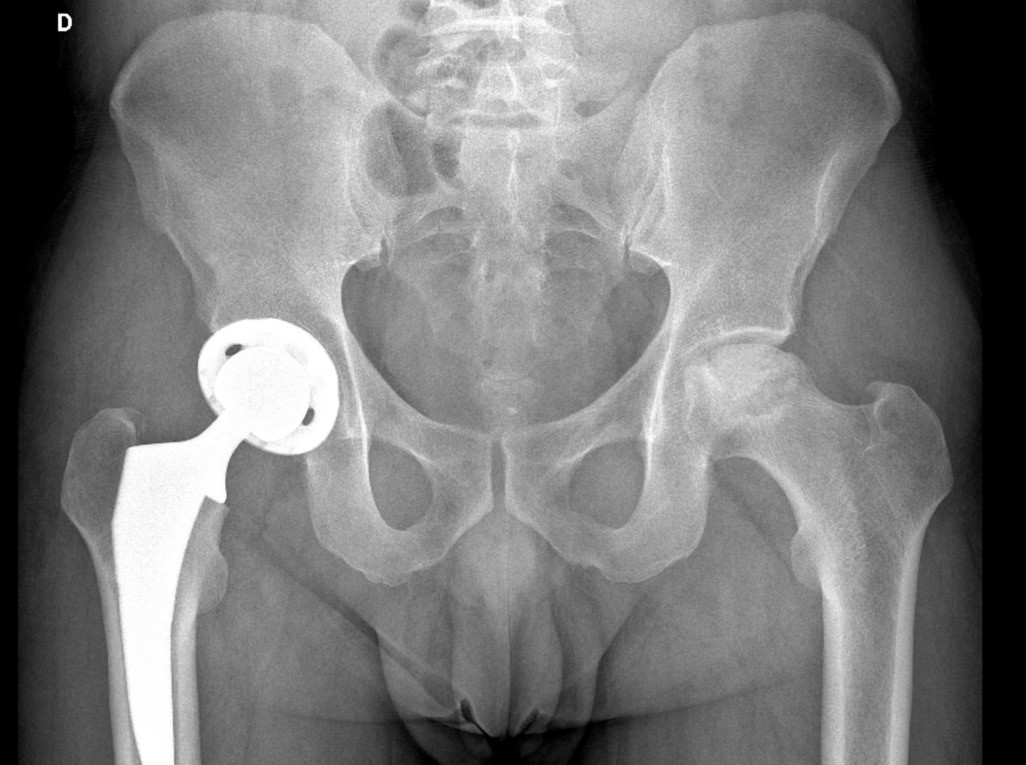
When that cartilage wears away, bone rubs on bone and pain, stiffness and loss of function appear. A hip replacement resurfaces these damaged surfaces with artificial components that recreate the natural movement.
How does it work?
A cup is implanted in the pelvis, with a low-friction liner of highly cross-linked polyethylene or ceramic.
The damaged head is removed and a stem is fixed inside the femur.
A ceramic or metal ball attaches to the stem and articulates with the liner, reproducing the hip's movement.
The components are fixed with bone cement or with surfaces that let the patient's own bone grow onto them.
When is it indicated?
- Advanced hip osteoarthritis, the most common cause.
- Rheumatoid arthritis or other inflammatory arthropathies.
- Avascular necrosis of the femoral head.
- Sequelae of fractures or hip dysplasia.
- Pain that does not improve with conservative treatment (analgesia, physiotherapy, weight loss) and limits daily activities.
Primary and revision replacement
Most patients receive a primary replacement, their first joint-replacement surgery. Modern prostheses have excellent survivorship, usually beyond 15 to 20 years.
Over time, or from wear, loosening or infection, a prosthesis may need a further operation on the area, called a revision replacement. It is a technically more complex procedure that requires specific experience.
Benefits, alternatives and shared decision-making
Surgery usually reduces pain and improves function in selected patients, but it does not guarantee freedom from pain or a fully normal range of motion. The decision to operate is made together, considering the symptoms, their impact on daily life and the available alternatives.
Before surgery, non-surgical measures are usually tried: analgesia, physiotherapy, weight loss and activity modification. A replacement is considered when pain limits daily life and does not respond to these measures.
Possible risks and complications
Like any major surgery, a hip replacement carries risks. Your team will discuss them with you according to your case:
- Persistent pain or stiffness.
- Infection of the wound or of the prosthesis.
- Venous thrombosis (blood clots) and pulmonary embolism.
- Fracture of the bone during or after surgery.
- Injury to nerves or blood vessels.
- Dislocation (the hip coming out of place).
- The need for revision surgery in the future.
Recovery
Recovery is gradual. Most patients walk with assistance the same day or the day after surgery and progress with physiotherapy over the following weeks, according to their team's plan.
If your team gave you hip precautions —for example, avoiding crossing your legs, certain movements, or very low chairs— follow them as instructed. Precautions depend on the surgical approach and on each patient, so they are not the same for everyone.
This information is educational and does not replace a medical evaluation. Every case requires an individualized assessment and treatment.
Questions about your case?
Book an evaluation at RedSalud Vitacura or the Instituto Oncológico FALP.
Book an appointment